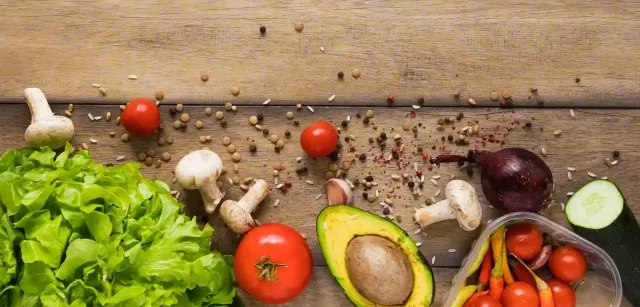
Food waste in Spain falls 19.2% since 2020, but rises 0.4% in 2025
Each Spaniard threw away 24.3 kilos or litres of food and drink in 2025, according to the Ministry of Agriculture's annual report. Households account for 97.5% of measured waste.
InfoCórdoba newsroom
·
Photo: Banco de Alimentos de Córdoba
Spain wasted 1,129.91 million kilos or litres of food and drink in 2025, both inside and outside the home. That is 24.3 kilos or litres per person, according to the latest annual report from the Ministry of Agriculture, Fisheries and Food (MAPA).
The figure is down 19.2% compared with 2020, but up 0.4% on 2024. Households account for 97.5% of the waste measured: 1,101.8 million kilos or litres. In homes with children, 70% waste food frequently.
Fruit and vegetables, the most thrown away
77.5% of household waste is products thrown away without ever being used. Fruit accounts for 32.1% and vegetables for 13.9%: together, 46%. They are followed by dairy products (13.4%), drinks (6.2%) and fresh bread (4.9%).
Among dishes already cooked, the ones that most often end up in the bin are pulses (17.3%), salads and vegetables (14%) and meat dishes (13.5%).
What the law requires
Law 1/2025, of April 1, sets a common framework for the whole food chain. Companies within its scope must draw up surplus prevention and measurement plans, sign donation agreements with social organisations or food banks and follow a hierarchy: first prevent, then send food fit for human consumption for that purpose and, if that is not possible, process or recover it.
In the hospitality sector, the rule requires making it easy for customers to take away food they have not eaten at no additional cost, except for single-use plastic containers.
At home
Planning menus and shopping, storing food properly, adjusting portions and using up leftovers are the measures indicated by MAPA. One of the most frequent causes of household waste is confusing the use-by date with the best-before date: the first appears on highly perishable foods and, once passed, they must not be consumed; the second indicates how long the product retains its optimum qualities, and afterwards it may still be safe if the packaging is intact and it has been stored properly.
Context
The world day on food loss and waste is marked every September 29, proclaimed in 2019 by the UN General Assembly. Worldwide, 1,050 million tonnes were wasted in 2022, 132 kilos per person, according to the UNEP Food Waste Index.
Share this story
Breaking news from News, on your phone
An alert only when something can't wait. Free, no account needed.
On iPhone, alerts only arrive if you first add InfoCórdoba to your Home Screen.
How to do it, step by step
This browser can't receive alerts. Try another one, such as Chrome or Safari.
You've blocked alerts from InfoCórdoba in this browser. You can turn them back on in its settings.
How to do it, step by step