29-N general election in Córdoba How to vote, the calendar and every result since 1977

A UCO scale unifies the monitoring of pistachio growth

Topics Universidad de Córdoba

The tool, based on the BBCH scale, describes 56 stages of the crop and allows farmers and researchers to identify which phase the plant is in.

InfoCórdoba newsroom ·
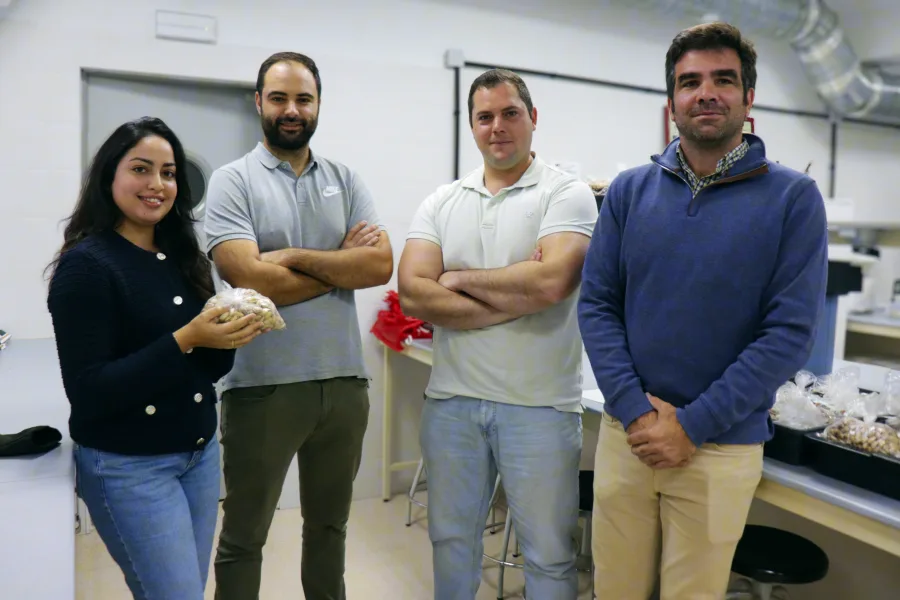
Cuatro personas posan de pie en un laboratorio; una sostiene un puñado de pistachos y hay bolsas con frutos secos sobre la mesa.
Photo: Universidad de Córdoba · Gabinete de Comunicación
Pistachio is spreading to new areas of Andalusia and, with it, the need to know at exactly what moment each plant is. A team from the University of Córdoba (UCO) has developed a scale that describes 56 stages of the pistachio cycle, from germination to leaf fall, so that farmers and researchers speak the same language when following the crop. The tool is based on the BBCH scale, used internationally to assess the growth of different crops, and adapts it to pistachio. It is organized into eight main stages and a series of secondary stages, with a decimal coding system: the first number indicates the main state of the plant and the second, the secondary state. Thus, 0.0 corresponds to vegetative buds, 5.0 to reproductive buds and 9.9 to total leaf loss. The scale includes demonstrative photos of each stage to facilitate its identification on the tree.

Why it is needed in Andalusia

Researcher Fatima Zahra Akhrif explains that «in pistachio we did not have a standardized scale to be able to follow the development of the plant». The work is based on the monitoring of two farms in Córdoba and Seville during 2024 and 2025, with weekly visits and twice a week during the critical flowering period. Five female varieties ('Kerman', 'Sirora', 'Aegina', 'Larnaka' and 'Lost Hills') and two male varieties ('Peters' and 'Randy') were characterized. Researcher Carlos Trapero points out that the scale responds to «the lack of cold in some of the pistachio plantations in Andalusia», where new plantations are being established in which the moment of flowering must be well controlled. Knowing the exact state of the plant allows treatments to be applied that help it flower better. The study data also record the chronology of these varieties in the Andalusian climate, something that the university considers useful for developing varieties with lower cold requirements. For researcher Pedro Valverde, the tool will facilitate the monitoring of the trials: «before, not having it, we had that homogenization of the description of the phenological state of the plant complicated». The work, signed by Akhrif, Valverde, Pascual and Trapero, has been published in the journal Scientia Horticulturae and can be consulted at the study reference.

Shall we let you know what matters?

Phone alerts

Change or remove it in my alerts