29-N general election in Córdoba How to vote, the calendar and every result since 1977

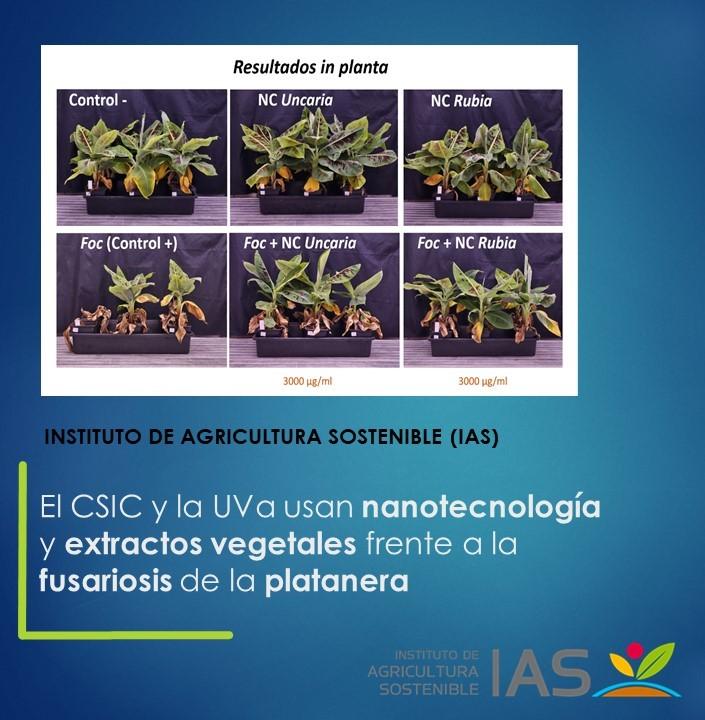
Nanotechnology and plant extracts slow banana fusariosis by 34.9%

Topics Instituto de Agricultura Sostenible

A CSIC study in Córdoba and the University of Valladolid slows the progression of the disease in preliminary trials with plants.

InfoCórdoba newsroom ·
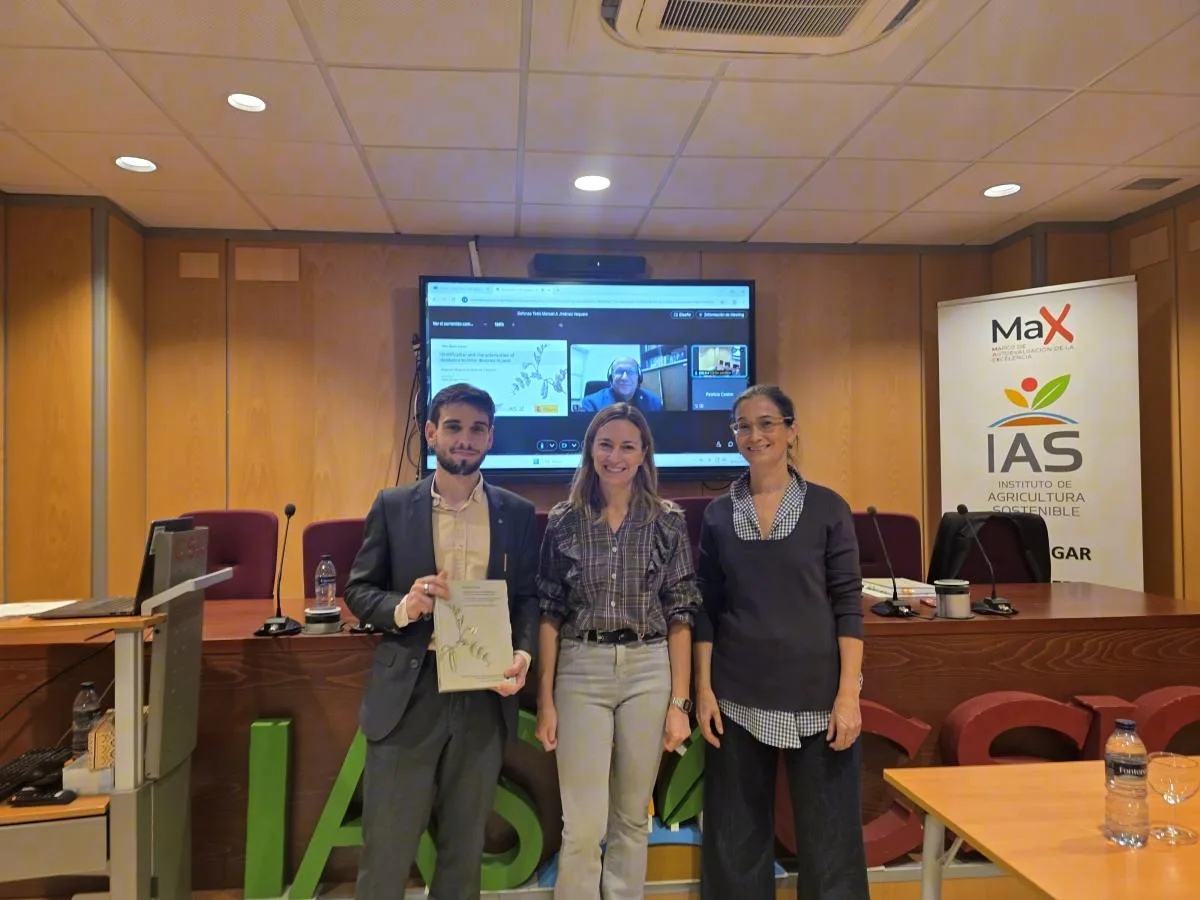
Tres personas posan sonrientes en una sala con pantalla y cartel del IAS al fondo.
Photo: Instituto de Agricultura Sostenible (IAS-CSIC)
A formulation combining nanotechnology and plant extracts reduces the progression of vascular fusariosis, one of the most damaging diseases for banana or plantain crops, by 34.9%. This has been verified by researchers from the Institute for Sustainable Agriculture (IAS-CSIC), a centre of the Spanish National Research Council (CSIC) in Córdoba, and the University of Valladolid, in a preliminary evaluation with plants. The work, published in the journal Agronomy, indicates that the treatment does not prevent infection, but it does slow the advance of symptoms. The formulation combines chitosan-based nanocarriers, a natural biopolymer with antimicrobial properties, with extracts of Rubia tinctorum, a Mediterranean plant with antifungal properties.

No authorised fungicide

Fusariosis is caused by the fungus Fusarium oxysporum f. sp. cubense (Foc). In the Canary Islands, the main producer in the European Union, the incidence of the subtropical strain (STR4) ranges between 2 and 12%, with outbreaks reaching up to 30% of plants in some areas. The tropical race (TR4), which is more aggressive, has not yet reached the archipelago. In Spain there is no fungicide authorised for field use. Current control is based on exclusion and prevention measures and on agronomic practices that hinder the survival of the pathogen in the soil, such as liming and the management of fertilisation and irrigation. The trials were carried out in vitro against races TR4 and STR4 and in a preliminary trial with nine plants per treatment of the Grand Nain variety. A second formulation with Uncaria tomentosa extract worked in vitro, but had no effect on the plants. According to researcher Eva Sánchez, first author of the work, «any tool that manages to delay the disease and reduce losses would be of commercial and agronomic interest». The team considers that the most obvious application of these results lies in the development of new biofungicides or preventive treatments within an integrated management strategy, and warns that more studies are needed.

Shall we let you know what matters?

Phone alerts

Change or remove it in my alerts

2 fotos

Foto: Instituto de Agricultura Sostenible (IAS-CSIC)