29-N general election in Córdoba How to vote, the calendar and every result since 1977

The catfish reduces fishing in the Iznájar reservoir by 76% in 18 years

Topics Iznájar Universidad de Córdoba

A study by the University of Córdoba links the drop in the performance of fishing competitions in Iznájar with the spread of the catfish.

InfoCórdoba newsroom ·
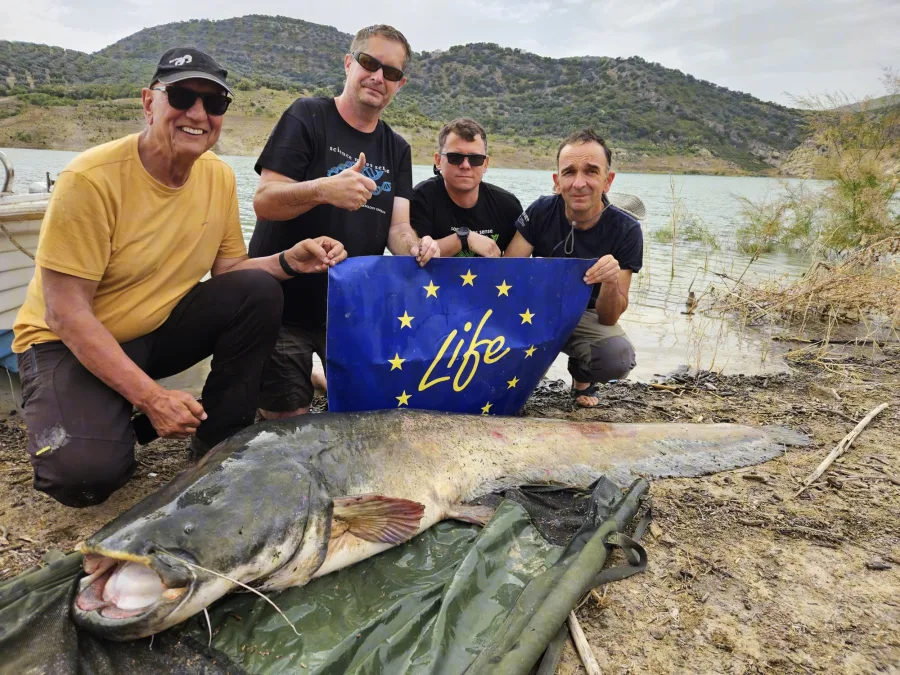
Cuatro hombres junto a un enorme siluro sobre una lona verde en la orilla de un embalse, sosteniendo una bandera azul con estrellas y la palabra Life.
Photo: Universidad de Córdoba · Gabinete de Comunicación
Each participant in the official competitions at the Iznájar reservoir caught an average of 4.6 kilos per hour in 2008 and 1.1 kilos in 2025. That is 76% less in 18 years, according to a University of Córdoba study that links this collapse to the presence of the wels catfish, an invasive species. The work is based on 175 competitions and 1,877 angler entries recorded between 2008 and 2025, always with the same rules: a single rod per angler for four hours, a drawn position and all catches weighed before returning the fish alive to the water. In 2008 almost all participants caught something; in 2025, two out of every five returned without a single fish. The decline was concentrated in the early years: by 2011 about three quarters of the drop had already occurred and since 2012 fishing has not recovered. The collapse began before the first official record of the wels catfish, in 2011, which fits with the accounts of local anglers who saw the first specimens around 2003. The emeritus professor of Zoology Carlos Fernández Delgado, who leads the research, explains that «the wels catfish not only eats the fish, but its mere presence makes carp and barbel change their behaviour and be caught less, and it alters the functioning of the whole reservoir». The study is published in Fisheries Management and Ecology. The researcher recalls that fishing for wels catfish is illegal and that, if caught, it cannot be returned alive to the water, although such practices exist in Iznájar and favour the growth of the predator's population. Based on the results, the recommendations involve curbing the spread and reducing the wels catfish population: preventing new releases in reservoirs, increasing surveillance and control of illegal fishing, establishing early detection strategies and involving anglers as allies in these measures.

Shall we let you know what matters?

Phone alerts

Change or remove it in my alerts