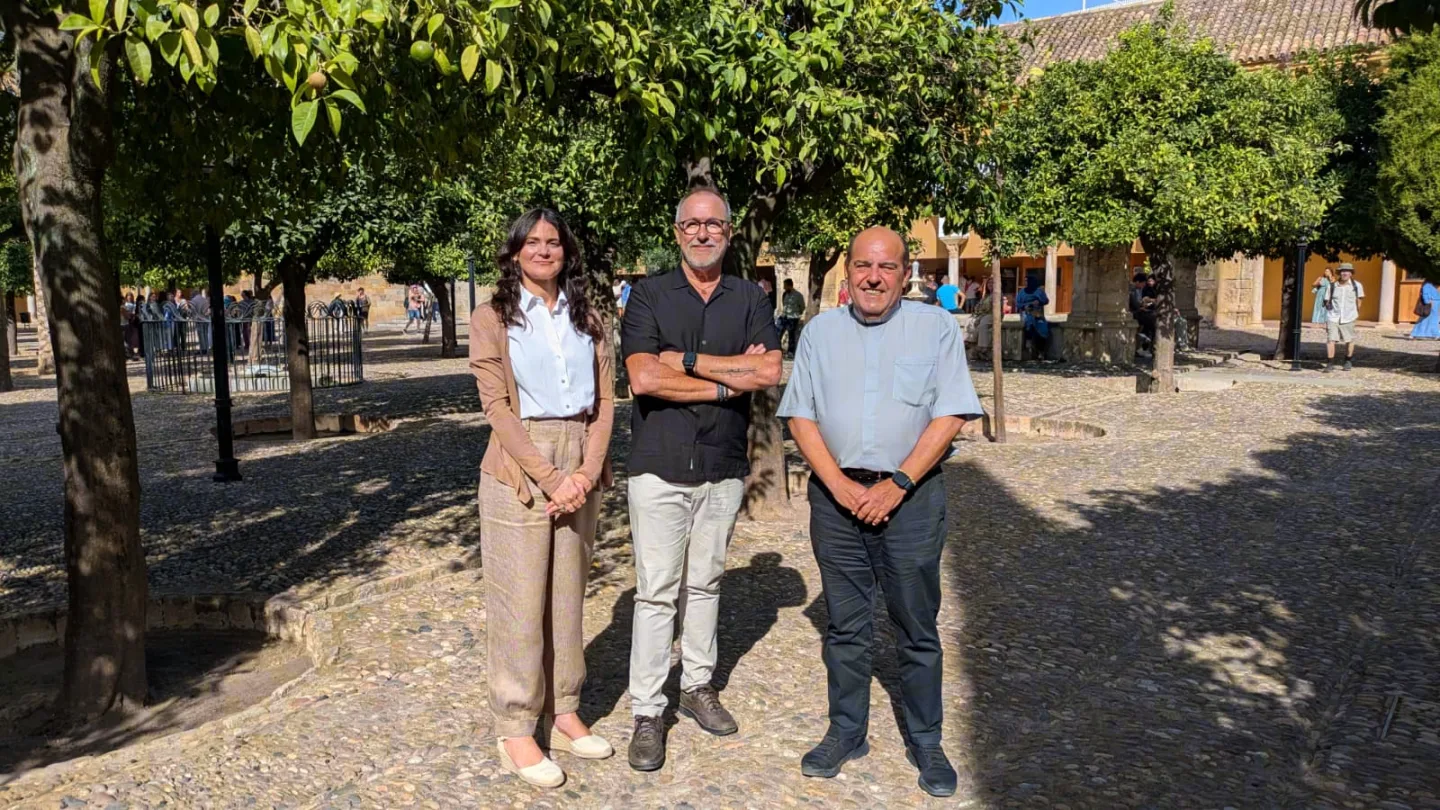
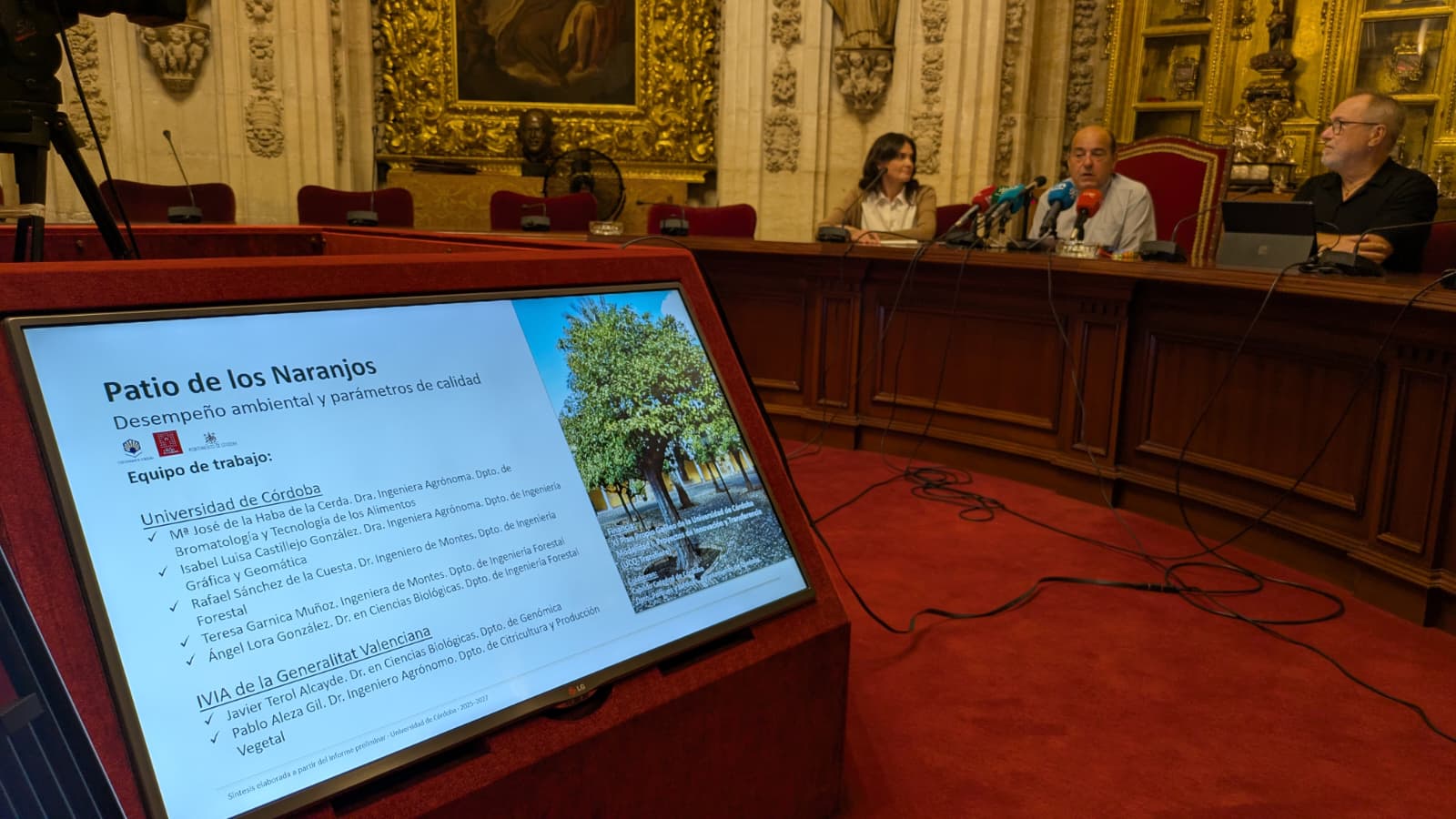
The Cabildo Catedral and the Universidad de Córdoba present an analysis on the environmental role of the 97 orange trees of the Patio de la Mezquita-Catedral in the face of climate change.
InfoCórdoba newsroom
·
Photo: Cabildo de la Mezquita-Catedral
The Cabildo Catedral de Córdoba and the Universidad de Córdoba (UCO) have presented the first results of a study on the environmental value of the orange trees of the Patio de los Naranjos of the Mezquita-Catedral and their contribution to climate change and the city's air quality.
The work, carried out by a team from the Escuela Técnica Superior de Ingeniería Agronómica y de Montes (ETSIAM) of the UCO, has analyzed tree by tree the 97 orange trees of the Patio, of which 96 are bitter orange trees and one is sweet. The age, dimensions, state of conservation and canopy volume of each specimen have been studied, using technological tools that have made it possible to precisely georeference each tree and calculate its environmental contribution.
According to the data presented, the citrus trees of the Patio store more than 98.5 tonnes of CO₂ equivalent and produce more than three million liters of oxygen each year. The trees also help remove pollutants and particles from the air such as carbon monoxide, ozone, nitrogen dioxide, sulfur dioxide, and the particles known as PM10 and PM2.5.
The spokesperson canon of the Cabildo Catedral, José Juan Jiménez Güeto, has explained that these figures are roughly equivalent to the CO₂ that would be released by burning about 42,000 liters of gasoline, and that the annual oxygen production of the orange trees is similar to what about twenty-three people would consume at rest over a full year.
Natural filter and next phases of the project
The research also studies the oranges themselves as indicators of environmental pollution. Preliminary analyses suggest that the trees of the Patio can act as natural filters capable of capturing certain harmful compounds present in the air.
The project runs between 2025 and 2027 and its next phases include comparing the orange trees of the Patio with specimens from other locations in Córdoba, such as the Alcázar de los Reyes Cristianos, as well as a genetic study of the different varieties. The research has the collaboration of the Departamento de Parques y Jardines of the Ayuntamiento de Córdoba.
Jiménez Güeto has pointed out that the study seeks to highlight a function of the Patio that, he says, has traditionally been overshadowed by its historical, heritage and scenic value: its role as one of the great green spaces in the city's historic center.
Share this story
Breaking news from News, on your phone
An alert only when something can't wait. Free, no account needed.
On iPhone, alerts only arrive if you first add InfoCórdoba to your Home Screen.
How to do it, step by step
This browser can't receive alerts. Try another one, such as Chrome or Safari.
You've blocked alerts from InfoCórdoba in this browser. You can turn them back on in its settings.
How to do it, step by step