
CSIF denounces that 76% of Cordoban schools started the year with incomplete staff
A survey by the CSIF union among teachers in Córdoba reveals unfilled staff positions, high ratios and a lack of resources to attend to students with specific needs at the start of the 2026/2027 school year.
Redacción · Published on September 14, 2026
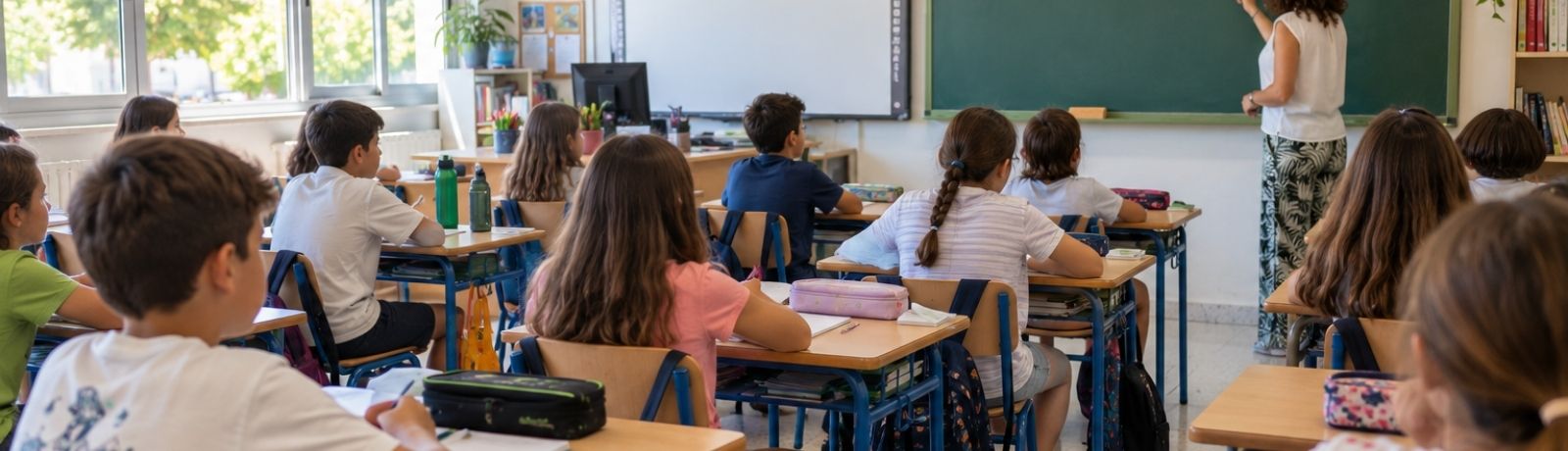
The union CSIF has warned that the 2026/2027 school year has begun in Córdoba «with more needs than resources in the classrooms». According to a survey carried out by the union among teachers, 76% of Córdoba's educational centers started September with an incomplete staff, and 80% of teachers expect some impact from the delay in the incorporation of personnel.
The head of CSIF Educación Córdoba, Antonio Pachón, maintains that «the Administration must be foresighted and be clear that the school year started on September the first and by that date all pending vacancies must be covered, instead of waiting for the arrival of students». He adds that failing to take this into account means ignoring the organizational burden that teachers take on in the first days.
The union also criticizes an incident recorded in the Sistema de Provisión de Interinidades (SIPRI) of the Consejería de Educación, which forced a correction of the first assignment of postings when, according to CSIF, many teachers were already traveling or had arrived at their destinations, with the resulting personal and economic damages and delays in joining the centers.
Ratios and attention to diversity
Almost 73% of the teachers surveyed consider that the student-to-classroom ratios are high, excessive or, in some cases, higher than what the law sets. Pachón recalls that the agreement signed by CSIF in 2025 with the Consejería includes lowering the ratio to 22 students per classroom in the three years of educación infantil, with progressive implementation in the rest of the stages, although he considers it necessary to keep advancing because, he states, the current situation «directly hinders attention to students». The same agreement includes improvements in teleworking, personal leave days during the school term, teaching promotion through access to cátedra and reduction of bureaucracy, measures that CSIF describes as beneficial but says it will remain watchful over their effective implementation.
More than 63% of the teachers surveyed consider the human resources for attending to students with specific educational support needs (NEAE) to be insufficient or clearly insufficient. Pachón points out that this student population has grown in Córdoba by almost 51% between the 2015/2016 and 2024/2025 school years, while the resources allocated to attend to them have only increased by 17%.
Regarding infrastructure, 26% of teachers state that their center's facilities have important or serious deficiencies. Pachón asks the Administration to invest more so that education, as a public service, is provided «under dignified and safe conditions».
The head of CSIF Educación Córdoba, Antonio Pachón, maintains that «the Administration must be foresighted and be clear that the school year started on September the first and by that date all pending vacancies must be covered, instead of waiting for the arrival of students». He adds that failing to take this into account means ignoring the organizational burden that teachers take on in the first days.
The union also criticizes an incident recorded in the Sistema de Provisión de Interinidades (SIPRI) of the Consejería de Educación, which forced a correction of the first assignment of postings when, according to CSIF, many teachers were already traveling or had arrived at their destinations, with the resulting personal and economic damages and delays in joining the centers.
Ratios and attention to diversity
Almost 73% of the teachers surveyed consider that the student-to-classroom ratios are high, excessive or, in some cases, higher than what the law sets. Pachón recalls that the agreement signed by CSIF in 2025 with the Consejería includes lowering the ratio to 22 students per classroom in the three years of educación infantil, with progressive implementation in the rest of the stages, although he considers it necessary to keep advancing because, he states, the current situation «directly hinders attention to students». The same agreement includes improvements in teleworking, personal leave days during the school term, teaching promotion through access to cátedra and reduction of bureaucracy, measures that CSIF describes as beneficial but says it will remain watchful over their effective implementation.
More than 63% of the teachers surveyed consider the human resources for attending to students with specific educational support needs (NEAE) to be insufficient or clearly insufficient. Pachón points out that this student population has grown in Córdoba by almost 51% between the 2015/2016 and 2024/2025 school years, while the resources allocated to attend to them have only increased by 17%.
Regarding infrastructure, 26% of teachers state that their center's facilities have important or serious deficiencies. Pachón asks the Administration to invest more so that education, as a public service, is provided «under dignified and safe conditions».