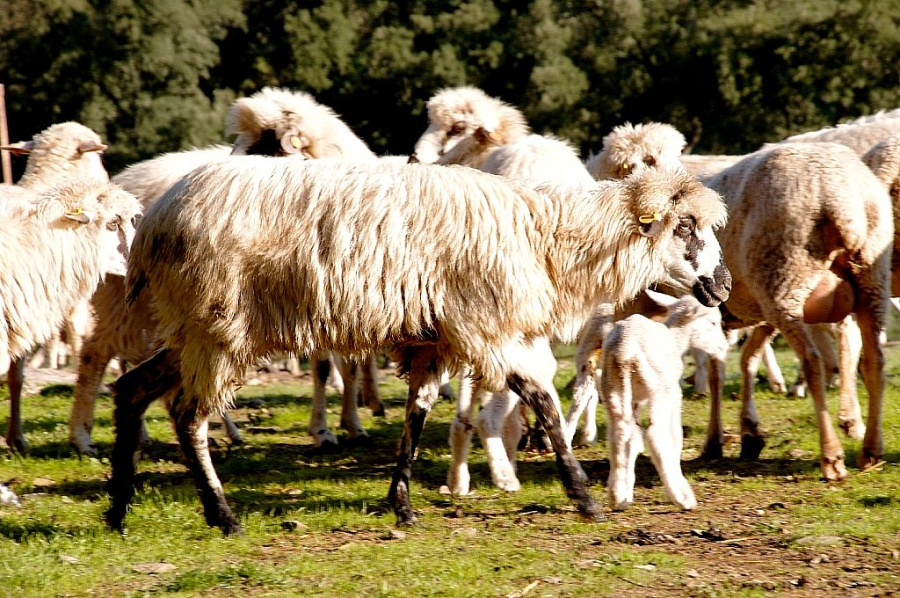
The research, based on genealogical books of twelve native breeds and four integrated ones, points to the intensive use of sires and the lack of records as risks for the conservation of the sheep heritage of Spain and Portugal.
Photo: Universidad de Córdoba · Gabinete de Comunicación
A study by the University of Córdoba (UCO) has analysed the demographic situation of 16 sheep breeds on the Iberian Peninsula to understand how their populations are evolving and to propose measures to prevent the loss of genetic diversity. Around 60 native sheep breeds are counted on the peninsula, to which are added the so-called integrated breeds, originating from other places but adapted to the territory's conditions and production systems.
What threatens these breeds
According to the University of Córdoba, among the main problems detected are the low census of breeding animals, the imbalance between males and females and the lack of complete information in the genealogical records of Spanish native breeds. The research also points to the intensive use of sires, dynamics in which a limited number of individuals produce a high number of offspring and which can "favour the appearance of demographic bottlenecks, increase inbreeding and progressively reduce genetic diversity", according to the author of the work, Laura Marín Marín.
To this is added the fragmentation and geographical dispersion of some breeds, with many breeders and farms but small flocks. The researcher, from the UCO's Group for the Improvement and Conservation of Genetic Resources of Domestic Animals (AGR-218), points out that "it is necessary to improve the quality and depth of genealogical records to assess genetic diversity and the real size of populations more accurately".
Differences between breeds
The work is based on data from the genealogical books of twelve native breeds and four integrated breeds, provided by breeders' associations. The results show clear differences in the population patterns of some breeds and others. The Portuguese ones analysed present, in general, more complete genealogies and patterns that indicate more stable population management, while the Spanish ones carry more shortcomings in the paternal filiation of the animals, which limits the reliability of genetic analyses.
The UCO highlights the role of breeders' associations in correcting the loss of genetic diversity in certain breeds. The conclusions suggest that there is no single conservation strategy applicable to all, but rather that each one requires combining census, reproductive and genealogical information to draw up its own protection and improvement plans.
Publication and participants
The study has been published in the journal Biology and has counted on the participation of research staff and institutions from Spain and Portugal, including the Andalusian Institute of Agricultural, Fisheries, Food and Ecological Production Research and Training (IFAPA), the Diputación de Córdoba and the National Institute of Agrarian and Veterinary Research of Portugal (INIAV).
Share this story
Breaking news from News, on your phone
An alert only when something can't wait. Free, no account needed.
On iPhone, alerts only arrive if you first add InfoCórdoba to your Home Screen.
How to do it, step by step
This browser can't receive alerts. Try another one, such as Chrome or Safari.
You've blocked alerts from InfoCórdoba in this browser. You can turn them back on in its settings.
How to do it, step by step