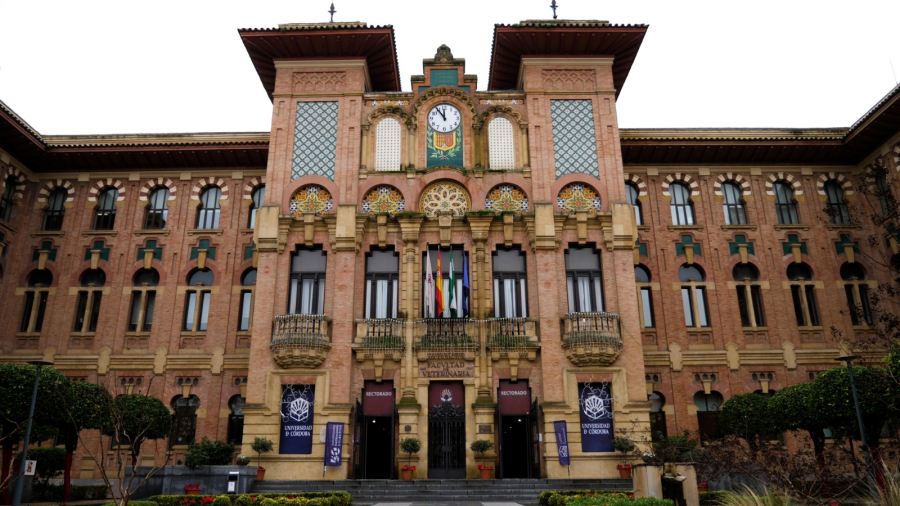
The University of Córdoba places 51 researchers, 41 men and 10 women, on the list that identifies the 2% of the world's most cited and influential scientists, the institution reports. Eleven of them are among the top ten in Spain in their discipline.
FJCG
·
Photo: Universidad de Córdoba · Gabinete de Comunicación
The University of Córdoba (UCO) places 51 of its researchers in the ninth edition of the ranking produced by Professor Ioannidis, of Stanford University, with Elsevier and the Scopus database, which identifies the top 2% of the world's most cited and influential scientists. Of these, 41 are male researchers and 10 are female researchers, spread across 23 scientific subfields.
Presence in the ranking
The list has two parts: career-long impact, with data up to the end of 2025, and single-year impact, 2025. Of the 51 from the UCO, 39 appear on the career list, 32 on the 2025 list and 20 on both. The institution adds three new disciplines with a presence in this edition: Cardiovascular System & Hematology, Immunology and Medicinal & Biomolecular Chemistry.
The 51 researchers account for 2.42% of the 2,105 records from Spanish institutions in those same subfields. The UCO's weight is greater in the national elite: it holds 10 of the 211 places in the Spanish top 10 of each subfield on the career list, 4.52%.
The disciplines with the greatest presence
Analytical Chemistry concentrates 10 researchers, 5.7% of the Spanish total in the subfield. It is followed by Veterinary Sciences, with four researchers and 10.5%; Agronomy, with four and 5.5%, and Education, with two and 5.6%. Ricardo Fernández-Escobar, in Horticulture, is number one in Spain on both lists. In total, 11 UCO researchers are among the top ten nationally.
What the ranking measures
The ranking groups the world's research staff into 20 major areas and 174 subfields. The list includes the 100,000 researchers with the highest composite score or those in the top 2% of their subfield: 243,949 on the career list and 249,310 on the annual one. That score weights citations, the h-index, the hm-index adjusted for co-authorship and the author's position, and measures impact, not productivity. The database includes indicators without self-citations and data on retracted articles.
According to the UCO, the complexity of normalizing institution names and affiliations makes exact identification of researchers difficult. Spain contributes 5,903 researchers in this version, taking both databases into account. The ranking also includes staff with no current activity at the university and emeritus professors.
Share this story
Breaking news from News, on your phone
An alert only when something can't wait. Free, no account needed.
On iPhone, alerts only arrive if you first add InfoCórdoba to your Home Screen.
How to do it, step by step
This browser can't receive alerts. Try another one, such as Chrome or Safari.
You've blocked alerts from InfoCórdoba in this browser. You can turn them back on in its settings.
How to do it, step by step